
Oo. That's good!I like what Henry Wadsworth Longfellow said: "Music is the universal language of mankind".

Oo. That's good!I like what Henry Wadsworth Longfellow said: "Music is the universal language of mankind".

I mean both! LOL You just did the "alluding" to yourself, as, of course, I knew you would! Do you hear an "Eeeeyyyy, ooooorrrrr!!!!????"LOL. You mean "delusions"
LOL. No . . . music theory is an actual science. It isn't "theoretical" so to speak. It has to do with composition, notation, and rhthym and such and all the related elements like melody and harmony.Music theory is the theory behind music.
You never disappoint.I mean both! LOL You just did the "alluding" to yourself, as, of course, I knew you would! Do you hear an "Eeeeyyyy, ooooorrrrr!!!!????"

See post 87Once you propose a definition for music, you're doing music theory. So his request/question/challenge/whatever is self-stultifying.
Plato et al definitely saw a morality in music, as can anyone. I've never read that he equated them. But if you mean by that that he asserted that bad music made bad people, and good music made good people, then that is correct.According to Plato, music is a “moral law.”

You said 25 words or less.LOL. No . . . music theory is an actual science. It isn't "theoretical" so to speak. It has to do with composition, notation, and rhthym and such and all the related elements like melody and harmony.

Read it. See post 81.See post 87

Music theory is some non-musical, technically minded person trying to explain what the musicians are doing.Can anyone here, besides me, actually define 'music'?
Remember, one needs no music education whatever to know it when he hears it.
So, without allusions to music theory, can anyone define it?
25 words or less...
Go.
LOL. Okay. Let me rephrase for the pedantic among us...Read it. See post 81.

Beyond some general notion about the arrangement of sounds, you guess correctly.My guess is that there is no actual consensus on a definition of music.
There are seven notes in a major scale. A major chord has in its composition the root (1), third, and fifth notes. You flat the 3rd in order to produce a minor chord which is used in certain progressions and in order to add a particular feel. You may also add in a seventh or ninth note to make it bluesy or jazzy.My guess is that there is no actual consensus on a definition of music.
The oldest musical instrument discovered: tuned to the diatonic, do re mi scale.There are seven notes in a major scale. A major chord has in its composition the root (1), third, and fifth notes. You flat the 3rd in order to produce a minor chord which is used in certain progressions and in order to add a particular feel. You may also add in a seventh or ninth note to make it bluesy or jazzy.
Just don't EVER flat the fifth and add a minor third! If you do, they will come for your liver!
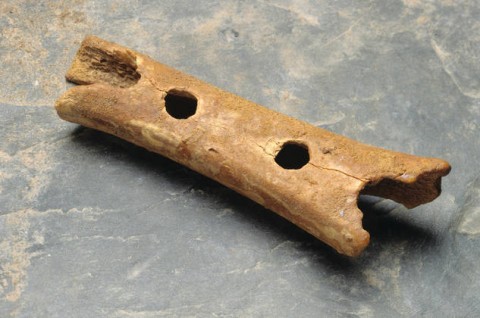
 www.openculture.com

 www.upi.com
Bwahahahahahahahaha!There are seven notes in a major scale. A major chord has in its composition the root (1), third, and fifth notes. You flat the 3rd in order to produce a minor chord which is used in certain progressions and in order to add a particular feel. You may also add in a seventh or ninth note to make it bluesy or jazzy.
Just don't EVER flat the fifth and add a minor third! If you do, they will come for your liver!
Well spoken, token.Beyond some general notion about the arrangement of sounds, you guess correctly.