
Church of England should protect 'every belief', King says
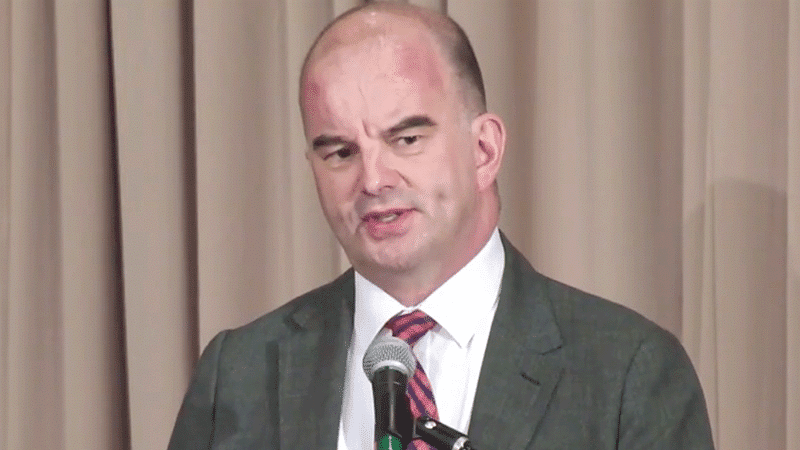
King Charles III was speaking at the opening of General Synod, the Church of England's national assembly
 www.bbc.com
 www.bbc.com
 www.christian.org.uk

There are about 39 beliefs that the Church of England needs to protect, and for the most part they can't even manage that.Church of England should protect 'every belief', King says
King Charles III was speaking at the opening of General Synod, the Church of England's national assembly

Aren't Church of England and the Anglican Church basically the same thing?
The Pilgrims who came to Plymouth in 1620 were "Separatists," meaning that they came to America with the intent of officially leaving the Church of England. They were known as Congregationalists. The Puritans who came to Boston in 1629 were nominally still in the Church of England, and wanted to purify that denomination from within, but they almost immediately began to function separately from Church of England episcopal governance and they too became known as Congregationalists. These Puritans did not believe in religious freedom - they persecuted Quakers and Baptists, and they drove out Roger Williams and Anne Hutchinson for daring to teach religious freedom. After about 150 years, many of the Congregationalists went liberal and became known as Unitarians, of whom it was said (tongue in cheek) that they confined themselves to "the fatherhood of God, the brotherhood of man, and the neighborhood of Boston." Some Congregationalist churches are aligned today with the Conservative Congregational Christian Conference and the Evangelical Congregational Church - the latter group is mainly in Pennsylvania. Most Congregational churches have dropped the Congregationalist name and are now in the very liberal United Church of Christ (formed in 1957, no connection with the Campbellite Churches of Christ).When the Pilgrims departed England for religious Freedom what church denomination did they form?
When the Pilgrims departed England for religious Freedom what church denomination did they form? I never thought to ask. I know the Mayflower story. I have been to Plymouth Rock. I will take this question one step further. What denomination would the Puritans have been? Would it be these groups were totally separate?
