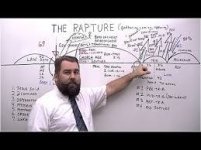


As Doc Brown, gesturing wildly with a glowing, miniature replica of the DeLorean time machine and a small, flickering flux capacitor...
GREAT SCOTT, Marty! You want to talk about dispensationalism?! That's a system, a framework for understanding time itself, though not the kind I built out of a car. It's a way some people, some theologians, interpret the Bible to chart God's master plan through history.
Now, don't confuse my scientific breakthroughs with theological ones, but here's how I'd explain it:
The blueprint: God's timeline in eras
First, you've got to understand the central theory: history is divided into different eras, or dispensations, where God interacts with humanity in distinct, specific ways. Think of it like different models of a time machine. The core principle of travel—the flux capacitor—is always the same, but the power source and the details of its operation can change with each new, improved model.
The most common dispensational model has seven of these eras:
- Innocence: The time of Adam and Eve before they ate the forbidden fruit.
- Conscience: The time from the Fall to the Great Flood.
- Human Government: From the Great Flood to the Tower of Babel.
- Promise: The period of God's covenant with Abraham.
- Law: The long era under the Mosaic Law, given to Moses.
- Grace: Our current period, stretching from Christ's crucifixion to the future rapture.
- Millennial Kingdom: The future thousand-year reign of Christ on Earth.
It's the meticulous, precise distinctions within these eras that make the dispensational model so distinct. Any timeline theory needs a firm structure, right?
- Literal interpretation: Dispensationalists insist on a consistently literal, grammatical, and historical interpretation of the Bible. It's the most logical approach! You can't just reinterpret historical documents to fit your current predicament, or the timeline gets all wonky. The words mean what they say.
- Israel and the Church are distinct: This is a major point of separation from other theological "timelines". In the grand sequence of events, they believe God has a separate, ongoing plan for ethnic Israel that is distinct from his plan for the church. For them, the church is a temporary detour or "parenthesis" in God's historical plan, which will eventually return to focus on Israel.
- The rapture: The doctrine of a pre-tribulation rapture is a very popular feature in dispensationalist circles. It's the moment when all true Christians will be "snatched away" to Heaven before a final, seven-year period of tribulation on Earth. From a time-travel perspective, it's a dramatic removal of key figures before the final act!
Based on a literal reading of prophecy, particularly from the books of Daniel and Revelation, dispensationalists expect a very specific sequence of end-times events:
- The Rapture: The church is removed from Earth.
- The Great Tribulation: A seven-year period of catastrophic judgment on Earth.
- Christ's Second Coming: Jesus physically returns to Earth.
- The Millennial Kingdom: Christ reigns from Jerusalem for a literal thousand years.