Think Spurgeon would had been much closer to what a Christian should hold to and believe in thoughNot exactly. He leaned Unitarian sometimes because he had doubts about the Trinity, supposedly. But he believed firmly in Jesus's miracles and the Resurrection--the very things Jefferson cut out of his Bible.
Thomas Jefferson was a confirmed skeptic, but I prefer to think of Charles Dickens as a sincere believer, albeit a latitudinarian ("big-tent") Anglican with some weak theological leanings. Nothing too unusual for the Victorian era.
Charles Spurgeon and Dickens were contemporaries, about 20 years apart in age. loved Dickens's novels and owned a complete set, though he was critical of Dickens's portrayal of religious figures in his stories (Dickens was a nominal Anglican but opposed to organized religion, and didn't like Nonconformists, of which the Baptist Spurgeon was one, or the evangelical "Low Church" wing of the C. of E.). But they had common ground in their concern for the poor and other social issues.

You are using an out of date browser. It may not display this or other websites correctly.
You should upgrade or use an alternative browser.
You should upgrade or use an alternative browser.
What books, if any are you reading, or have you read in the past year
- Thread starter Bob Jones V
- Start date
Keeping the Heart John Flavel

- Joined
- Jan 30, 2013
- Messages
- 4,353
- Reaction score
- 2,543
- Points
- 113
i am way behind in my intended reading.... but since i had a ton of down time recently - with nothing else i could do- i started trying to get through several douglas preston - lincoln child books that have been stacking up... . but got sidetracked playing legend of zelda windwaker instead ..... it;s the only legend of zelda game so far, i have not been able to complete... ..kinda sad since it came out over 20 years ago..... . ...sadder still i didn;t complete it this time either...
  ...... i;m thinking about breaking down and busting out the game guide i have on it and just cheating to win it..... did that one time before with another video game... and didn;t feel good about it.... ...it;s much better and more rewarding to play the game the hard way and think your way through it.... but this game is known to this day as one of the hardest of all the legend of zelda series.....
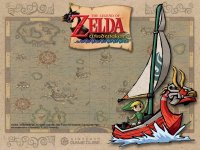
. ...sadder still i didn;t complete it this time either... ...... i;m thinking about breaking down and busting out the game guide i have on it and just cheating to win it..... did that one time before with another video game... and didn;t feel good about it.... ...it;s much better and more rewarding to play the game the hard way and think your way through it.... but this game is known to this day as one of the hardest of all the legend of zelda series..... 
- Joined
- Jan 25, 2012
- Messages
- 14,167
- Reaction score
- 4,168
- Points
- 113
- Location
- Ottawa, Ontario, Canada
Books in April:
The Iceman Cometh, Eugene O'Neill
All for Love, John Dryden
Mosquitoes, William Faulkner
A Streetcar Named Desire, Tennessee Williams
The Playboy of the Western World, J. M. Synge
Still on the nightstand: The Reverse of the Medal, Patrick O'Brian
Slow month. I generally try to read a novel a week plus a play on Saturdays. It takes no effort to do a drama--maybe an hour over breakfast and coffee--but I guess the novels were a bit of a slog this month. Mosquitoes was all right (better than Soldier's Pay in any case), but still slow going.
The Iceman Cometh, Eugene O'Neill
All for Love, John Dryden
Mosquitoes, William Faulkner
A Streetcar Named Desire, Tennessee Williams
The Playboy of the Western World, J. M. Synge
Still on the nightstand: The Reverse of the Medal, Patrick O'Brian
Slow month. I generally try to read a novel a week plus a play on Saturdays. It takes no effort to do a drama--maybe an hour over breakfast and coffee--but I guess the novels were a bit of a slog this month. Mosquitoes was all right (better than Soldier's Pay in any case), but still slow going.
I am new here and am still wandering around trying to figure out the mechanics of this site and it's forums.Think Spurgeon would had been much closer to what a Christian should hold to and believe in though
The only Spurgeon book I have and have read is 'Lectures to My Students'.
I am currently reading 'One Book, One Authority' and 'No Man Knows My History'.
In the last year I've read political books like Charlie Kirk or Judge Jeanine Pirro: and Scripture based books like "The Return of the Gods".

I don’t need to read no stinkin’ books. I got the Fundamental Forums to give me all the edumacation I needs! 
Ay men budduh!I don’t need to read no stinkin’ books. I got the Fundamental Forums to give me all the edumacation I needs!
- Joined
- Jan 25, 2012
- Messages
- 14,167
- Reaction score
- 4,168
- Points
- 113
- Location
- Ottawa, Ontario, Canada
Books in May and June:
The Reverse of the Medal and The Letter of Marque, Patrick O'Brian
Executive Power, Brian Andrews and Jeffrey Wilson
Stations of the Tide, Michael Swanwick
Three Stories and Ten Poems, Ernest Hemingway
Never Flinch, Stephen King
Sphere, Michael Crichton
The Rebel Sell: Why the Culture Can't Be Jammed, Joseph Heath and Andrew Potter
Antigone, Sophocles
Salome, Oscar Wilde
I Ought to Be in Pictures, Neil Simon
Long Day's Journey into Night, Eugene O'Neill
Waiting in the Wings, Noël Coward
The Shoemaker's Holiday, Thomas Dekker
Man and Superman, George Bernard Shaw
The Way of the World, William Congreve
and a small assortment of very escapist time-wasters in the form of comics and Japanese light novels.
Just started: A Fire Upon the Deep by Vernor Vinge.
The Reverse of the Medal and The Letter of Marque, Patrick O'Brian
Executive Power, Brian Andrews and Jeffrey Wilson
Stations of the Tide, Michael Swanwick
Three Stories and Ten Poems, Ernest Hemingway
Never Flinch, Stephen King
Sphere, Michael Crichton
The Rebel Sell: Why the Culture Can't Be Jammed, Joseph Heath and Andrew Potter
Antigone, Sophocles
Salome, Oscar Wilde
I Ought to Be in Pictures, Neil Simon
Long Day's Journey into Night, Eugene O'Neill
Waiting in the Wings, Noël Coward
The Shoemaker's Holiday, Thomas Dekker
Man and Superman, George Bernard Shaw
The Way of the World, William Congreve
and a small assortment of very escapist time-wasters in the form of comics and Japanese light novels.
Just started: A Fire Upon the Deep by Vernor Vinge.
I'm reading Three Views of Israel and the Church edited by Andy Naselli
The Nature and Value of Happiness by Christine Vitrano
Jonathan Edwards on the Good Life by Owen Strachan and Doug Sweeney
Religious Affections by Jonathan Edwards
Happiness & Contemplation by Josef Pieper
Keeping the Heart by John Flavel;
Who is Israel? What is a Jew? by Hal Brunson
The Nature and Value of Happiness by Christine Vitrano
Jonathan Edwards on the Good Life by Owen Strachan and Doug Sweeney
Religious Affections by Jonathan Edwards
Happiness & Contemplation by Josef Pieper
Keeping the Heart by John Flavel;
Who is Israel? What is a Jew? by Hal Brunson
https://www.amazon.com/Jonathan-Edw...sprefix=owen+strachan+edwards,aps,200&sr=8-10
- Joined
- Jan 25, 2012
- Messages
- 14,167
- Reaction score
- 4,168
- Points
- 113
- Location
- Ottawa, Ontario, Canada
I'm reading Three Views of Israel and the Church edited by Andy Naselli
Any good? Who are the other contributors?

Living Unoffended by Brant Hansen.
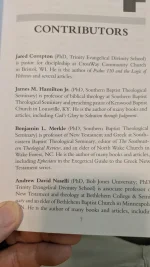
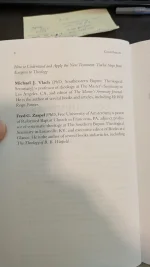
So far its good. I'm onto the first part by Michael Vlach, who is on the staff at the Master's seminary. Then there's Fred Zaspel & James Hamilton (Southern)together and Benjamin Merkle. I have yet to read theirs.Any good? Who are the other contributors?
- Joined
- Jan 25, 2012
- Messages
- 14,167
- Reaction score
- 4,168
- Points
- 113
- Location
- Ottawa, Ontario, Canada
So far its good. I'm onto the first part by Michael Vlach, who is on the staff at the Master's seminary. Then there's Fred Zaspel & James Hamilton (Southern)together and Benjamin Merkle. I have yet to read theirs.
I may have to add this one to my list. I think my views probably align closest to Zaspel, but that said, I don't really know the other guys (though I assume Merkle is the same Ben Merkle associated with the CREC).
I may have to add this one to my list. I think my views probably align closest to Zaspel, but that said, I don't really know the other guys (though I assume Merkle is the same Ben Merkle associated with the CREC).
- Joined
- Jan 25, 2012
- Messages
- 14,167
- Reaction score
- 4,168
- Points
- 113
- Location
- Ottawa, Ontario, Canada
Nope, not the same Benjamin Merkle at all. Turns out the one at New St. Andrews College is Benjamin R. Merkle.
Surprising for such an uncommon name. I assume the initials "L." and "R." stand for "Left" and "Right" to keep them straight.

I read a bunch of leadership books for my Master's degree this past year:
Tempered Resilience
Heroic Leadership
A Failure of Nerve
Managing Transitions
Positive Leadership
Extreme Ownership
Working on these right now:
Leisure the Basis of Culture - Joseph Pieper
The Emergence of Liberty in the Modern World - Douglas Kelley
Think Christianly - Joseph Boot
The Divorce of Israel (commentary on Revelation) - Kenneth Gentry
Northern Armaggedon: The Battle of the Plains of Abraham and the Making of the American Revolution - Peter McLeod
Kingdom Through Covenant - Peter Gentry and Stephen Wellum
Tempered Resilience
Heroic Leadership
A Failure of Nerve
Managing Transitions
Positive Leadership
Extreme Ownership
Working on these right now:
Leisure the Basis of Culture - Joseph Pieper
The Emergence of Liberty in the Modern World - Douglas Kelley
Think Christianly - Joseph Boot
The Divorce of Israel (commentary on Revelation) - Kenneth Gentry
Northern Armaggedon: The Battle of the Plains of Abraham and the Making of the American Revolution - Peter McLeod
Kingdom Through Covenant - Peter Gentry and Stephen Wellum
- Joined
- Jan 25, 2012
- Messages
- 14,167
- Reaction score
- 4,168
- Points
- 113
- Location
- Ottawa, Ontario, Canada
I read a bunch of leadership books for my Master's degree this past year:
Tempered Resilience
Heroic Leadership
A Failure of Nerve
Managing Transitions
Positive Leadership
Extreme Ownership
What's your thesis, assuming you're writing one?
It's a practical degree, so we can write on what is unique to our own situations. My thesis is essentially "Leading Yourself so that You Can Lead Others."What's your thesis, assuming you're writing one?
I will be weaving Deuteronomy 6 into the paper, including aspects of worship (we were made to worship) and the idea that we are holistic, (mind, body, spirit, emotions), and how they all fit together to be what God created us to be.
Not educational nor sound doctrine but I really enjoy a good Amish Murder Mystery.